
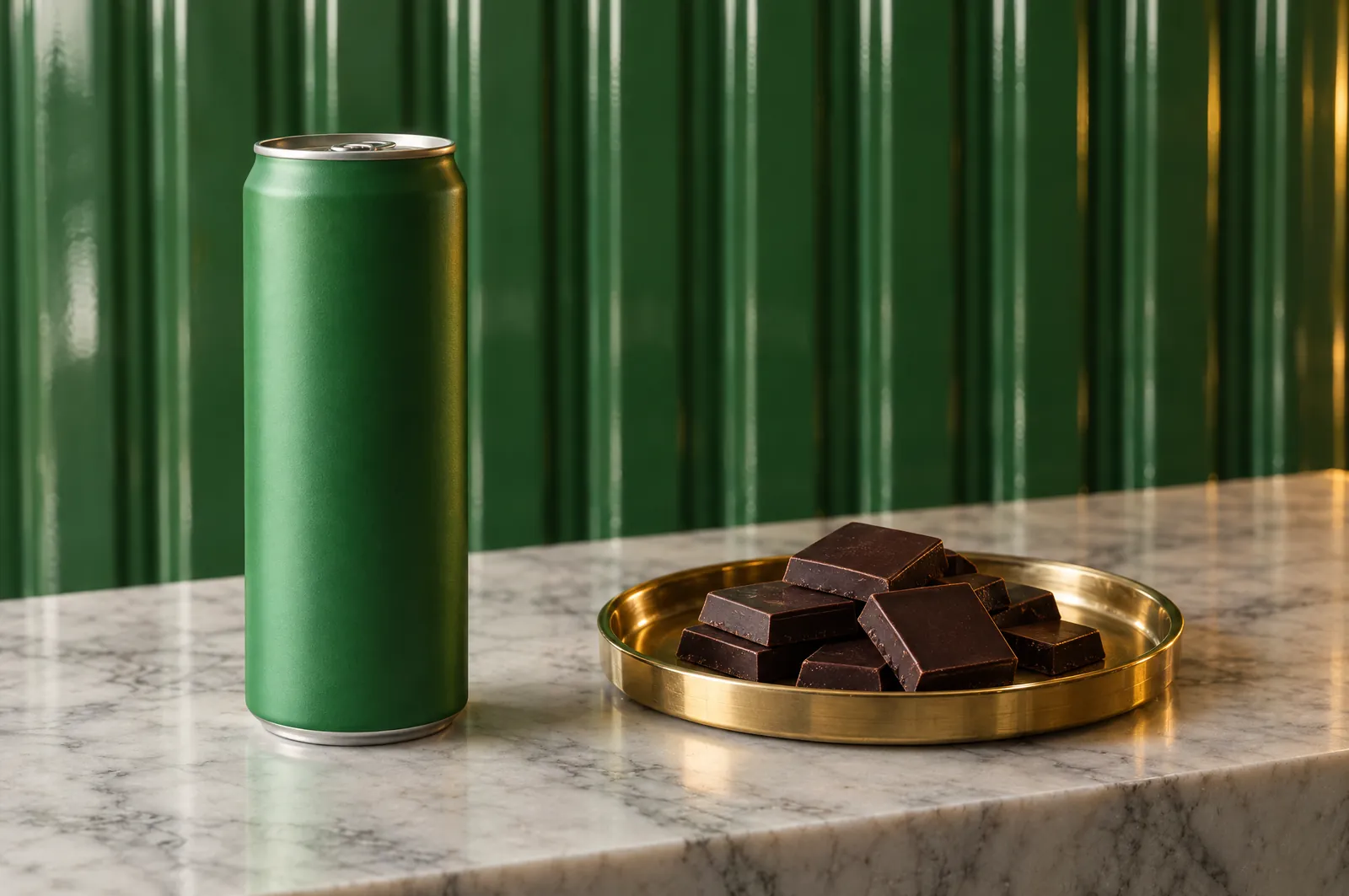
How THC Drinks and Edibles Are Made
Edibles start with a cannabis oil or distillate blended into a solid medium. Because THC is oil soluble and not water soluble, most solid edibles carry it in something fatty or sugary: a gummy base, a chocolate, a baked good, a coated piece. The oil is mixed in, the batch is set or baked, and the finished product is cut and portioned so each piece holds a measured amount.
Drinks solve a different problem. You cannot simply stir cannabis oil into water and expect it to stay put, so beverage makers use emulsification. The oil is broken into extremely small droplets and suspended throughout the liquid with the help of emulsifiers, a process often described on packaging as nanoemulsion or water-soluble THC. The result is a can or bottle where the cannabis is evenly distributed rather than floating on top.
That manufacturing split explains most of what follows. A solid edible arrives at your stomach as food. A drink arrives already broken down into fine droplets spread through a liquid, which is a very different starting point for absorption.
Dosing and Portioning: Pieces Versus Containers
Edibles are portioned by piece. A package is divided into individually measured units, and the label states the milligrams per piece along with the number of pieces in the package. That structure makes small adjustments simple. A piece can be halved or quartered if you want less, and the count on the box tells you exactly how many portions you bought.
Drinks are portioned by container or by listed serving. Many beverages are sold as a single serving in a single can, which means the portion decision is made when you open it. Others list multiple servings per bottle, and in that case the label tells you how much liquid counts as one. Splitting a drink is possible but requires measuring rather than breaking a piece off.
One example of the beverage format is BOHO Euphorics Fruit Punch, a 5 mg THC drink. Availability changes constantly, so check the live Dutchie menu at One Green Leaf for what is listed today rather than relying on any article, including this one.
Onset and Duration, and Why They Differ
Both categories are swallowed, and both pass through the liver before anything circulates. The difference is what has to happen first. A solid edible has to be chewed, moved into the stomach, and broken down by digestion before the cannabis oil inside it is even available for absorption. That work takes time, and the time is not fixed. A drink skips most of it, since the emulsion is already dispersed and liquid tends to leave the stomach faster than food.
In general terms, solid edibles are commonly described as taking longer to begin because digestion has to happen first, while drinks are frequently reported to start sooner. Treat both patterns as general rather than promised. Body weight, metabolism, tolerance, whether you have eaten recently, and the specific product all shift the timing, and two people can take the same serving and report very different results.
Duration follows similar logic. Solids tend to release over a longer stretch because digestion keeps feeding absorption gradually, so the tail is usually longer. Liquids are absorbed across a narrower window and tend to taper sooner. Both are variable between individuals. The practical takeaway for either format is the same: start with a small serving, give it time before deciding anything, and do not stack a second portion because the first one has not registered yet.
Flavor, Format, and Social Context
Drinks read as beverages. They come cold, they are sipped over time rather than eaten in one bite, and they fit naturally into settings where everyone else is already holding a glass or a can. Flavors track the beverage aisle: fruit punch, citrus, ginger, seltzer profiles. There is no smoke, and the pacing of a drink is inherently slower because you are consuming it across minutes rather than seconds.
Edibles are built for portability. A tin or pouch goes in a pocket, needs no chilling, and keeps well. Flavor range is wider because the format allows for chocolate, chews, hard candy, baked items, and more. The portioning is also more granular, since a piece can be split in a way that a sealed can cannot. For anyone who wants a measured amount they can carry and take later, the solid format is simply easier to handle.
Which Format Suits Which Shopper
Neither category is the better one. They solve different problems. Drinks tend to suit shoppers who want a beverage ritual, who prefer not to inhale anything, who like the idea of a defined single-serving container, and who want something that fits a social setting where a can in hand looks ordinary. The slower pace of sipping is part of the appeal.
Edibles tend to suit shoppers who want portability, who want to divide a portion into smaller pieces, who want something that keeps in a bag without refrigeration, and who prefer a more gradual profile. The per-piece labeling also makes it easy to track exactly what you took.
Plenty of people keep both on hand and choose by occasion rather than by preference. If you are unsure which fits the situation you have in mind, staff at One Green Leaf can point you to what is listed on the live menu and what the packaging says. Every product's own label remains the final word on servings and milligrams.
Shopping Drinks and Edibles at One Green Leaf in Gibbsboro
One Green Leaf is a licensed adult-use dispensary at 95 N Lakeview Dr, Gibbsboro, NJ 08026, in Camden County, open every day from 9 AM to 9 PM. You need to be 21 or older with a valid government-issued photo ID. No medical card is required. There are three ways to buy: walk in, reserve ahead for pickup, or use the drive-thru window. Alongside drinks and edibles, the menu carries flower, vapes and carts, pre-rolls, concentrates, and wellness items including tinctures and topicals.
The shop draws from Gibbsboro, Voorhees, Clementon, Stratford, Berlin, Lindenwold, Somerdale, Magnolia, Pine Hill, Laurel Springs, Blackwood, and Hi-Nella, and sits about 30 minutes from Philadelphia. New Jersey adult-use eligibility is based on age and ID, not residency, so visitors who are 21 or older with valid ID can shop. Note that Cherry Hill opted out of recreational sales, and Marlton is Evesham Township in Burlington County.
One point that is not negotiable for anyone arriving from out of state: cannabis purchased in New Jersey has to stay in New Jersey. Carrying cannabis across a state line is a federal offense regardless of what either state's law permits, and there is no exception for neighboring states. Anything you buy here stays here. For another state's own rules, consult that state's official cannabis regulator directly.
One Green Leaf LLC holds New Jersey CRC license RE000846, an Annual Class 5 Cannabis Retailer license valid through May 14, 2027.