Live resin is made from flower frozen right after harvest
Live resin gets its name from the starting material, not the finished oil. Instead of hanging and curing the plant for a week or more, the grower freezes the fresh flower shortly after it is cut. That fresh frozen material goes into extraction while it is still cold. Because the plant never goes through a long drying and curing window, far more of its volatile aromatic compounds are still present when the extraction runs.
Those aromatic compounds are terpenes, the same molecules responsible for how a lemon smells like lemon and a pine branch smells like pine. Terpenes are light and they evaporate easily, which is why a jar of cured flower smells different at week six than it did on day one. Freezing slows that loss down, so a live resin cart tends to carry an aroma much closer to the standing plant.
Live resin is typically made with a hydrocarbon solvent such as butane or propane, purged afterward under vacuum and heat. That is different from live rosin, which uses only heat and pressure on fresh frozen material and no solvent at all. Both start from fresh frozen flower, so if you see either term on a label at One Green Leaf, the source material was handled the same way at the front of the process.
Distillate is refined until it is close to a single compound
Distillate goes the other direction. Raw extract is winterized to drop out fats and waxes, decarboxylated, then run through short path or wiped film distillation. Each pass separates compounds by boiling point, and the goal is to isolate one cannabinoid fraction and leave nearly everything else behind. What comes out the other side is a clear to light amber oil that is chemically very simple compared to what went in.
The tradeoff is aroma. Terpenes boil off long before the target cannabinoid does, so a finished distillate smells and tastes like almost nothing on its own. That is why most distillate carts have terpenes added back before filling. Those added terpenes are either cannabis derived, meaning they were captured from cannabis extraction, or botanical derived, meaning they were sourced from other plants. The label or brand page usually says which.
That reintroduction step is also why distillate is so consistent. A producer can hit the same flavor target batch after batch because the flavor is a formulated input rather than whatever the harvest happened to give them. If you buy the same distillate cart three months apart, it will generally taste the way you remember it.
Aroma and flavor separate the two more than anything else
The clearest practical difference between live resin vs distillate is what happens on the first draw. A live resin cart made from a gassy cultivar smells gassy. One made from a citrus forward cultivar smells bright and rindy. The profile is specific to the plant it came from, and it can vary a little between batches of the same strain name because farming varies.
Distillate is the opposite. The base oil contributes almost no aroma, so the flavor you get is the flavor the producer built. Some brands aim for a faithful strain recreation, others aim for a flavor blend that no plant produces on its own. Neither approach is dishonest, but they are different products, and knowing which one you are holding sets expectations correctly.
Researchers have proposed that terpenes may interact with cannabinoids in ways that shape the character of the overall product, an idea often discussed as the entourage effect. That work is ongoing and far from settled, so treat it as a hypothesis under study rather than an established fact. For shopping purposes, the reliable observation is simpler. Live resin carries a fuller, more strain linked aroma, and distillate carries whatever aroma was added to it.
Color, viscosity and cart appearance often differ
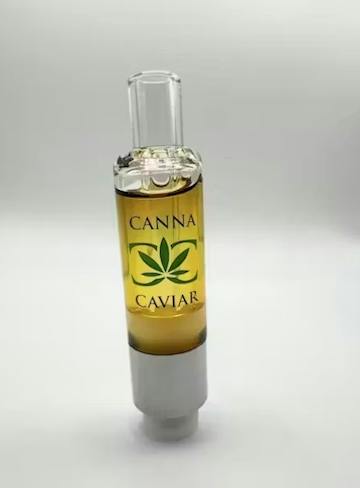
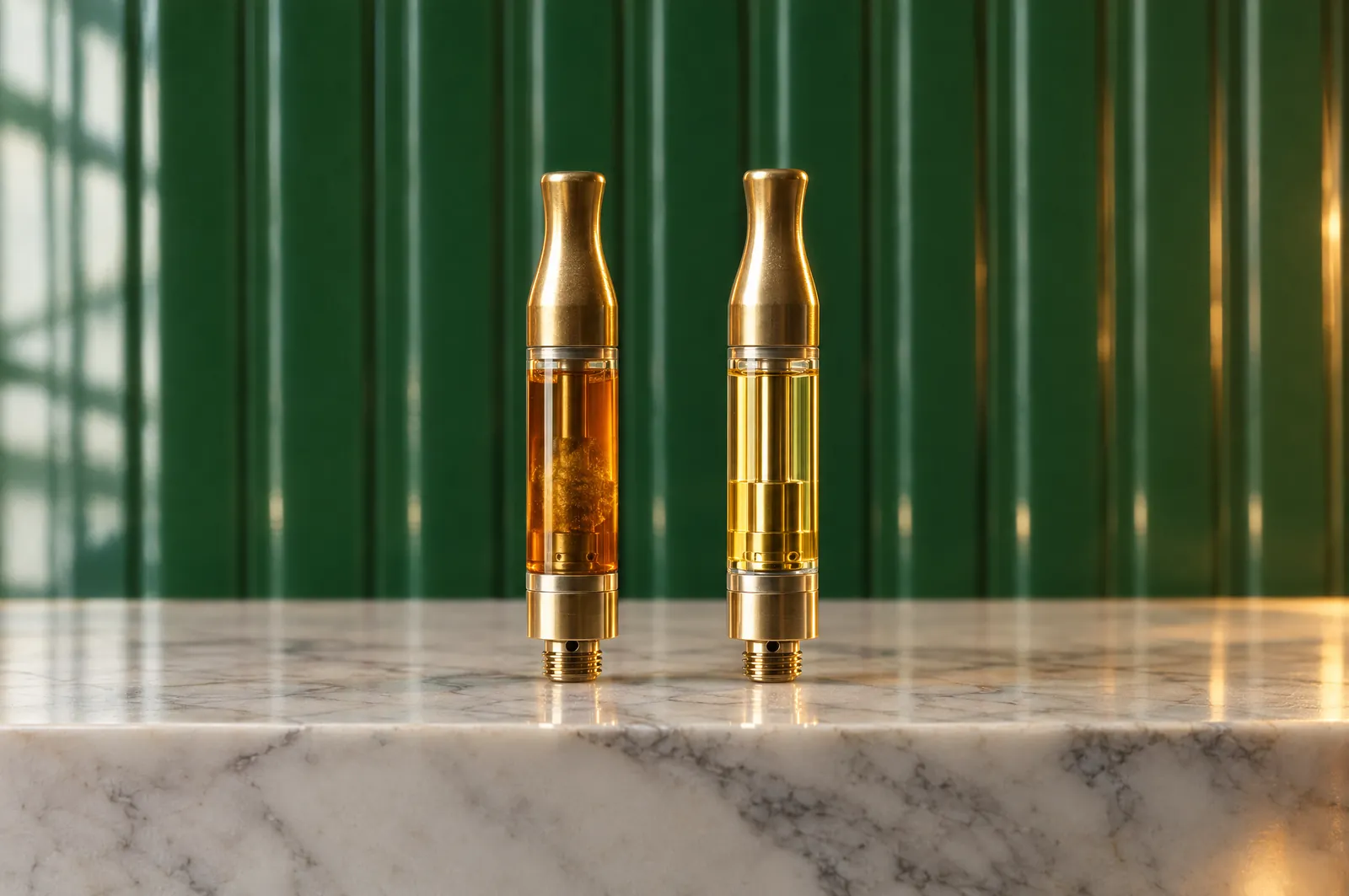
Held up to light, live resin usually looks golden to amber and can appear slightly hazier or more textured, because it retains more of the plant's original compound mix. Some live resin sits thicker in the tank and moves slowly when you tilt the cart. Distillate is typically clearer and lighter, often close to pale straw, and it usually flows faster.
Color is a weak signal on its own. A darker oil is not automatically older, and a lighter oil is not automatically cleaner. Color depends on the input material, the solvent, the purge, the number of distillation passes, and even the metal and wick used in the hardware. Use appearance to confirm what the label already told you, not to grade the product.
Storage matters for both. Heat and direct sunlight accelerate changes in any cannabis oil, so keeping a cart upright, capped and at room temperature is the standard handling advice. If a cart has been sitting in a hot car, expect it to look and behave differently than it did on the shelf.
Both formats sit side by side on the One Green Leaf menu
One Green Leaf is a licensed adult use dispensary in Gibbsboro, New Jersey, in Camden County and about 30 minutes from Philadelphia. Vapes and carts are one of the main categories alongside flower, edibles, pre rolls, concentrates and wellness items such as tinctures and topicals. The Dutchie menu updates in real time, so the live menu is the only accurate view of what is on the shelf right now.
When you filter the vape category, look at the product name and the brand description. Live resin products generally say live resin, fresh frozen, or live rosin when solventless. Distillate products generally say distillate, and many list whether the added terpenes are cannabis derived or botanical. If a listing is unclear, the staff at the counter can pull up the brand details for you.
You can shop in store, use the drive thru for pickup, or reserve ahead online. The store is open every day from 9 AM to 9 PM. You must be 21 or older with a valid government photo ID, and no medical card is required.
Which format suits you depends on what you want from the flavor
Live resin tends to suit shoppers who follow specific cultivars and want the cart to taste like the flower version of that cultivar. If you already notice the difference between one grower's Gelato and another's, or you buy flower partly for the smell of the jar, live resin is the format built around that preference. Accept a little batch to batch variation as part of the deal.
Distillate tends to suit shoppers who want predictability. If you value knowing exactly what the next cart will taste like, prefer a milder or more neutral draw, or want a specific added flavor that flower does not naturally produce, distillate is designed for that. It is also the more common format across the market, so the selection is usually broader.
Neither format is the better one, and plenty of regular shoppers keep both around for different occasions. A practical approach is to check the live menu at One Green Leaf, try one of each format when both are listed, and note which one you reach for more often. Effects vary from person to person, so start low and go slow.
Adult use cannabis in New Jersey may be purchased only by consumers 21 and older, and licensed dispensaries are required to verify a valid government issued photo ID at the point of sale.