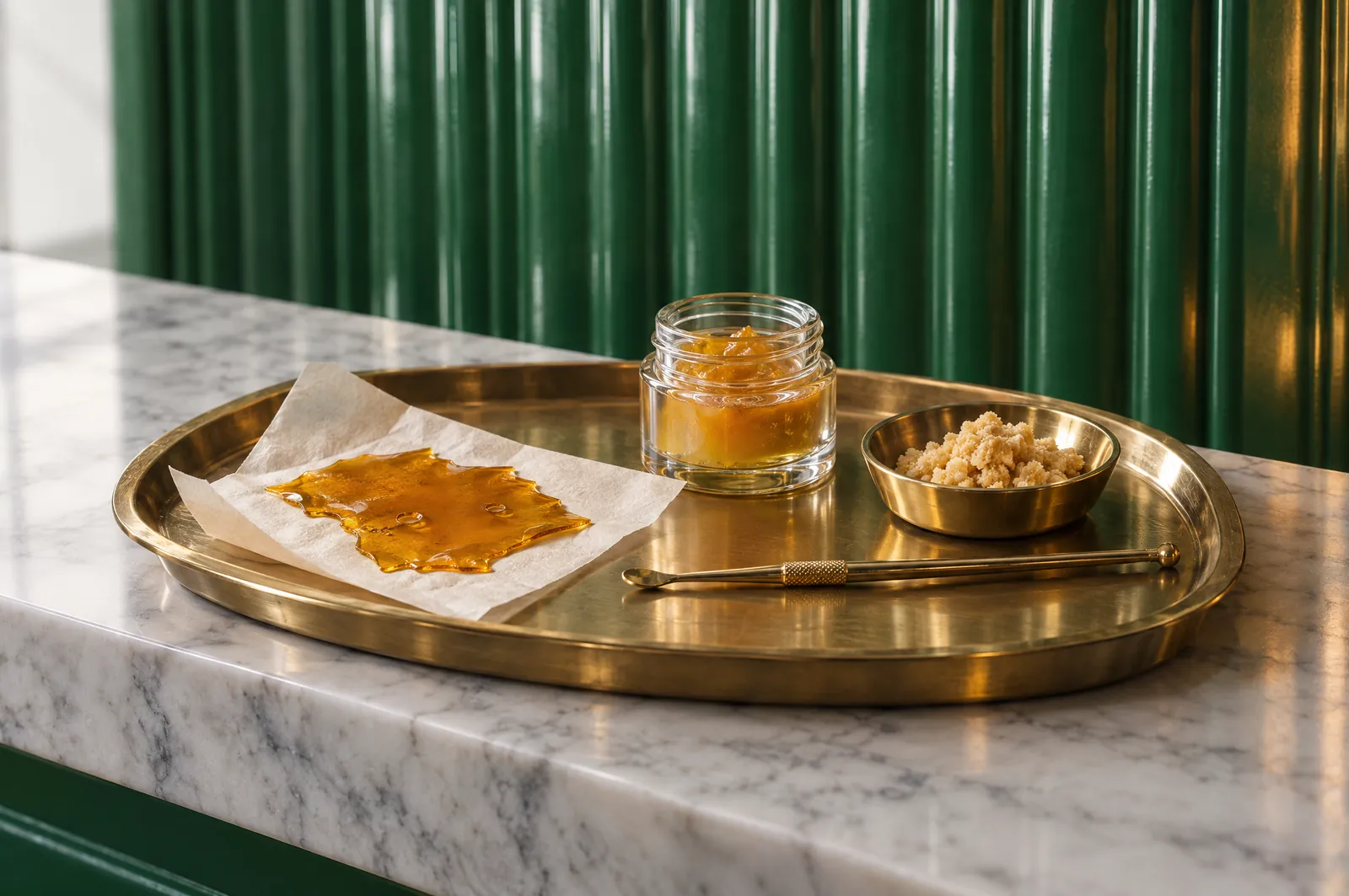
What cannabis concentrates are
Cannabis concentrates are products made by isolating the resin-rich part of the cannabis plant and removing most of the leaf and plant material around it. The trichomes, the tiny sticky glands that coat the flower, hold most of the plant's cannabinoids and terpenes. Concentrating them produces a final product that is small in volume but high in cannabinoid content.
Because so much of the plant material is stripped away, concentrates are more potent than the same weight of flower. That higher potency is the main reason budtenders often describe concentrates as a better fit for experienced consumers who already know how their body responds to cannabis. If you are newer to cannabis, it is reasonable to start slow and ask questions in store.
Concentrates come in many textures and names, and the labels can be confusing at first. Most of the differences come down to two things, how the concentrate was extracted and how it was handled and finished afterward. Once you understand those two ideas, the product names on the menu start to make sense.
Solventless versus solvent-based extraction
At a high level, there are two families of cannabis concentrates. Solventless concentrates are made using physical methods like heat, pressure, ice water, and filtration, with no chemical solvent involved. Rosin is the best known solventless example, pressed from flower or from sifted resin using heat and pressure. Live rosin is pressed from fresh frozen cannabis, which many people prize for its aroma.
Solvent-based concentrates are made by washing the plant material with a solvent such as butane, propane, or carbon dioxide to pull out the resin, which is then purged to remove the solvent. This family includes live resin, badder, budder, shatter, sauce, and distillate. Licensed New Jersey producers make these products in regulated facilities, and finished products are lab tested before they reach the shelf.
Neither family is automatically better than the other. Solventless products are often marketed on purity and full flavor, while solvent-based methods can produce a wide range of textures and very high cannabinoid levels. What matters most is the quality of the starting flower and the care taken during production. The live menu at One Green Leaf lists the extraction type and lab results for each product so you can compare.
The common types of concentrate
Live resin is a solvent-based concentrate made from fresh frozen cannabis rather than dried and cured flower. Freezing the plant right after harvest helps preserve the terpenes, so live resin is known for a strong, true-to-plant aroma. Live rosin is the solventless counterpart, pressed from ice water hash made from that same fresh frozen material.
Rosin, badder, and budder describe both a method and a texture. Rosin is the pressed, solventless extract. Badder and budder are whipped concentrates with a soft, cake-batter or frosting-like consistency that is easy to scoop and handle. They can be made through solventless or solvent-based routes depending on the producer.
Shatter is a solvent-based concentrate finished into a hard, glassy, amber sheet that snaps like brittle candy. Sauce is a concentrate with a wet, syrupy texture that often contains visible crystalline formations sitting in a pool of terpene-rich liquid. Distillate is a highly refined, stripped-down concentrate, usually a clear to golden oil, and it is the format most commonly used to fill many vape cartridges. Each type is simply a different point on the spectrum of texture and refinement.
How concentrates are typically consumed
The two most common ways to consume cannabis concentrates are a dab rig and a vaporizer. A dab rig heats a small nail or banana-shaped bowl, and a small amount of concentrate is applied to the hot surface so it vaporizes and can be inhaled. Because a small dab delivers a large amount of cannabinoids, portion size matters and many people use a tool to take a modest amount.
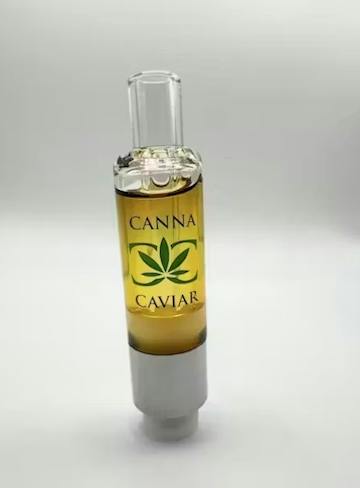
Vaporizers offer a simpler route. Many concentrates, especially distillate and live resin, come pre-loaded in vape cartridges that thread onto a battery, so there is no separate heating setup to manage. Some newer devices are designed specifically to vaporize concentrate textures like badder or sauce. Vapes are portable and tend to be the easier entry point for people who are curious about concentrates.
Whatever the format, the guiding idea is the same. Concentrates are more potent than flower, so a little goes a long way. Start with a small amount, wait to understand the effect, and adjust from there. This is general product education, not medical or dosing advice, and staff at the counter can walk you through how a specific device works.
Shopping concentrates at One Green Leaf
One Green Leaf Dispensary carries flower, vapes and carts, edibles, pre-rolls, concentrates, and wellness products such as tinctures and topicals. The concentrates category on the live Dutchie menu shows what is in stock right now, along with product type, brand, and lab-tested details, and prices are always current online.
You can shop the way that suits you. Buy in store, reserve ahead for pickup, or use the drive-thru. The dispensary is open every day from 9 AM to 9 PM at 95 N Lakeview Dr in Gibbsboro, Camden County, in South Jersey.
Cannabis is legal for adults 21 and older in New Jersey under the state's adult-use program, and no medical card is required to shop. Bring a valid government-issued photo ID. If you are comparing live resin against live rosin, or wondering whether a cartridge or a dab rig fits your routine, the team is glad to explain the options.
Cannabis is legal for adults 21 and older in New Jersey under the state's adult-use program.