A terpene chart organizes cannabis aromas, not outcomes
A cannabis terpene chart lines up terpene names against the smells they carry. Myrcene reads earthy and herbal, limonene reads citrus, caryophyllene reads peppery, pinene reads like conifer needles, and linalool reads floral. The chart is a vocabulary tool. It gives you words for what you notice when you open a jar, and nothing beyond that.
Terpene percentages appear on many product lab panels, usually listed from highest to lowest. Those numbers describe the sample that was tested, not every unit on a shelf. Growing conditions, harvest timing, drying, curing and storage all shift a terpene profile, which is why two batches sold under the same cultivar name can smell different from one another.
Because of that variability, treat the chart below as a starting point rather than a spec sheet. Researchers studying cannabis chemistry describe terpene composition as varying substantially between cultivars, so the aroma descriptions here are best confirmed against what is printed on the specific product in front of you.
Earthy and herbal notes: myrcene and humulene
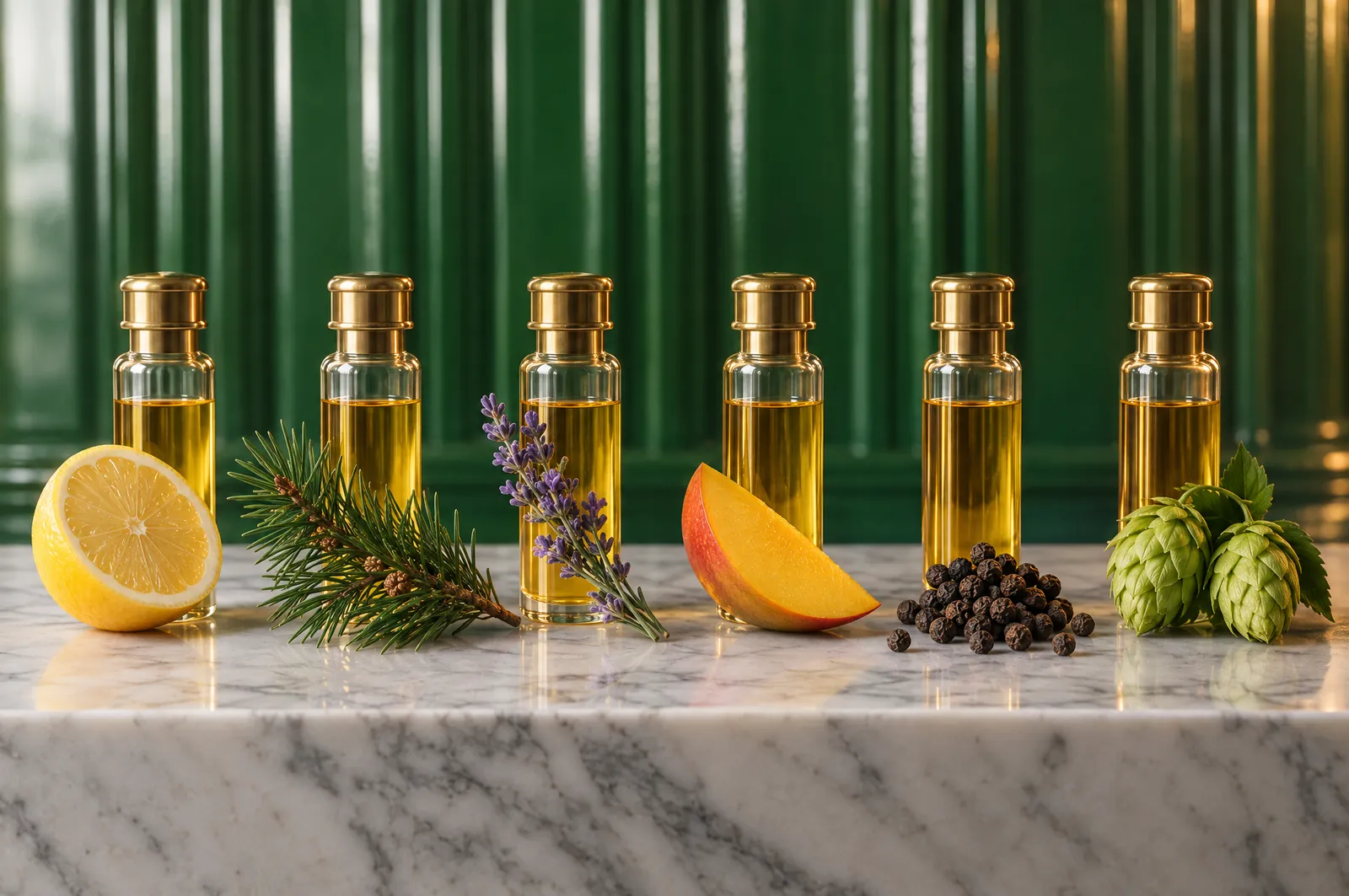
Myrcene is the terpene most often reported at the top of cannabis lab panels. Its aroma is earthy and musky, with a herbal undertone and a faint sweetness that some people compare to ripe fruit. Outside cannabis, myrcene turns up in hops, lemongrass, thyme, bay laurel and mango, which is why a myrcene-forward jar can smell closer to a brewery or a spice drawer than to citrus.
Humulene sits in that same earthy family but reads drier and hoppier. Named for Humulus lupulus, the hop plant, it carries a woody, slightly bitter aroma with a green herbal edge. It also occurs in sage, basil, coriander, clove and ginseng. Humulene and myrcene frequently appear together in hop-scented cultivars, which reinforces the resemblance.
On a menu, cultivars where these two lead often get described with words like earthy, musky, hoppy, woody or herbal. If those descriptors match what you like to smell, that is the shelf to start browsing.
Bright and fresh notes: limonene and terpinolene
Limonene is the clearest citrus signal on a terpene chart. Its aroma is lemon and orange rind, bright and a little sour-sweet, the smell released when you scratch the skin of a fresh citrus fruit. Limonene is the dominant aromatic compound in citrus peel oil and also appears in juniper, dill and peppermint. Cannabis described as lemony, zesty or orange-forward usually shows limonene high on its panel.
Terpinolene is harder to pin to one word. It reads fresh and piney first, then opens into herbal, faintly floral and slightly citrus notes, which is why it is often called the most complex of the common terpenes. In nature it occurs in nutmeg, cumin, apples, tea tree, lilac and several conifers.
Because terpinolene carries both a coniferous edge and a soft floral one, it can blur the line between the fresh column and the floral column of a chart. Reading the full terpene list on a product, rather than only the top entry, gives you a better picture of how it will actually smell.
Sharp and spicy notes: pinene and caryophyllene
Pinene appears in two forms, alpha and beta. Alpha-pinene is the sharper of the two, smelling like crushed pine needles and fresh conifer resin. Beta-pinene is rounder and more herbal, closer to rosemary or dill. Both are widespread in nature, occurring in pine and fir trees, rosemary, basil, parsley, dill and orange peel. Pinene is one of the most abundant terpenes across the plant kingdom.
Caryophyllene brings warmth instead of freshness. Its aroma is black pepper first, followed by clove, cinnamon and a dry woody note. It is found in black pepper, cloves, cinnamon, hops and rosemary. Chemically it is a sesquiterpene with an unusual ring structure, which sets it apart from most other terpenes on a standard panel.
Together these two account for much of what people mean when they call a cultivar sharp, spicy, peppery or forest-like. Pinene supplies the cold conifer edge and caryophyllene supplies the peppercorn heat.
Floral and sweet notes: linalool, bisabolol and ocimene
Linalool is the lavender note on a cannabis terpene chart. Its aroma is floral with a light spiced finish, the same scent profile that makes lavender recognizable across a room. Linalool also occurs in coriander, birch bark, laurel and mint, and it is one of the more common fragrance compounds in the wider plant kingdom.
Bisabolol is softer still. Alpha-bisabolol carries a delicate floral aroma with faint honey and apple sweetness, more subtle than linalool and easy to miss when stronger terpenes sit above it on a panel. Its best-known natural sources are German chamomile and the bark of the candeia tree.
Ocimene rounds out this group with a sweet, herbal aroma that has a green, slightly woody edge. It appears in mint, parsley, basil, mangoes, orchids and pepper. Cultivars with ocimene near the top of the list often get described as sweet and herbaceous rather than strictly floral.
How to use aroma notes when you shop at One Green Leaf
Start by naming the scent families you already respond to. Earthy and hoppy points you toward myrcene and humulene. Citrus points to limonene. Pepper and clove point to caryophyllene. Conifer points to pinene or terpinolene. Lavender and chamomile point to linalool and bisabolol. Those five groupings cover most of what you will read in a product description.
Our live Dutchie menu updates in real time and shows the terpene information each brand chooses to publish, including lab panels where the brand provides them. Because availability changes throughout the day, check the live menu rather than relying on a printed list, and confirm any aroma description against the panel for that specific batch.
One Green Leaf is a licensed adult-use dispensary in Gibbsboro, New Jersey, about 30 minutes from Philadelphia, carrying flower, vapes and carts, edibles, pre-rolls, concentrates and wellness products such as tinctures and topicals. You can shop in store, use the drive-thru and reserve ahead for pickup, every day from 9 AM to 9 PM. Bring a valid government photo ID and be 21 or older.
Researchers Booth and Bohlmann report that terpene profiles in Cannabis sativa vary substantially between cultivars, with dozens of individual terpenes contributing to a given plant's aroma.