
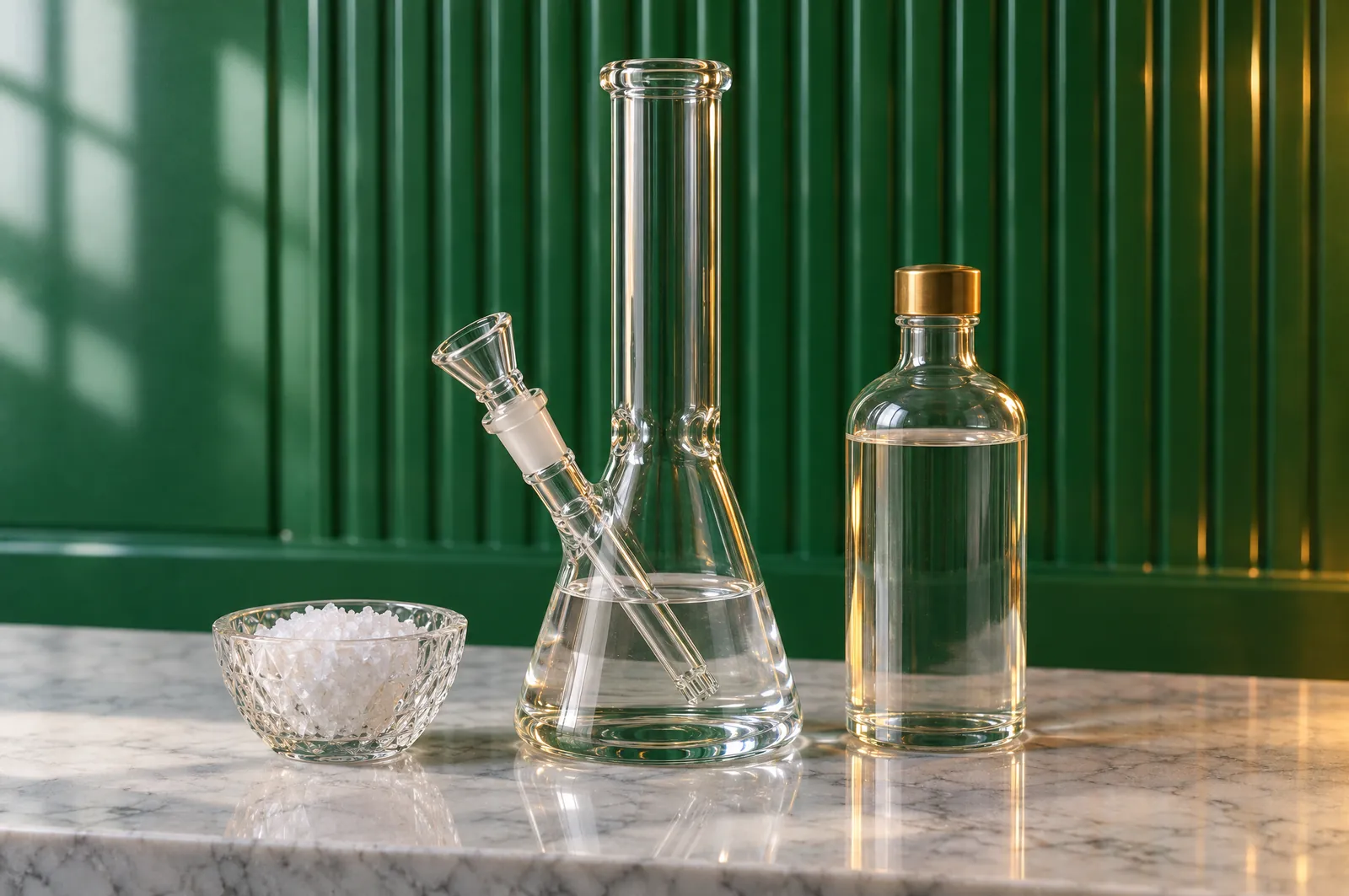
Resin buildup changes both taste and airflow
Resin is the sticky residue that condenses on the inside of the glass and inside the downstem after combustion. It is largely tar and other combustion byproducts, and it collects on every surface the smoke touches. As that layer thickens, it narrows the openings air moves through, so draws get harder and the water bubbles less freely than it did when the piece was new.
Taste is the other change. Old resin carries its own burnt smell, and that smell mixes with whatever you are smoking, so the aroma of a specific cultivar gets flattened out. People who clean on a schedule usually describe the difference in simple terms: the flower tastes closer to the way it smells in the jar.
Standing water contributes as well. Water left in the chamber for days develops a film on the glass and a stale odor that carries into the next draw. Dumping and refilling after each session is the lowest effort habit for keeping a piece close to clean between deep cleans.
Gather your supplies and check your materials first
The short list is isopropyl alcohol at 91 or 99 percent, coarse salt such as kosher, rock or Epsom salt, something to plug the openings, and warm water. Silicone caps work well as plugs, and small plastic bags secured with rubber bands do the same job. Add pipe cleaners or cotton swabs for tight spots, a bottle brush if you have one, a sink or basin, and paper towels.
Handle the alcohol with care. It is highly flammable, so work in a ventilated space with no open flame nearby, and put lighters and candles away before you start. Never mix isopropyl alcohol with bleach or other household cleaners. Gloves are optional but keep your hands from drying out over a long cleaning session.
Check what your piece is made of before the alcohol goes in. Borosilicate glass handles isopropyl without trouble, while acrylic and some plastics can cloud or craze, so follow the manufacturer guidance for those. Pull out rubber or silicone grommets and set them aside. One Green Leaf sells cannabis products, and accessory availability is not something to assume, so check the live Dutchie menu or ask in store rather than counting on any specific item being stocked.
The alcohol and salt method, step by step
Start by emptying the chamber. Pour the old water down a sink or toilet, then rinse the inside with warm tap water to flush loose ash and light residue. Avoid boiling water on cold glass, since the sudden temperature change can crack a piece. Remove the bowl and the downstem and set them in a separate container, because they clean better on their own.
Pour enough isopropyl alcohol into the chamber to cover the interior surfaces, usually a few inches at the base plus enough to slosh through the neck. Add a generous pour of coarse salt. The salt does not dissolve much in high proof alcohol, which is the point: the grains act as a scrubber and reach places a brush cannot. Plug the mouthpiece and the downstem joint, then shake for one to three minutes, rotating the piece so the mixture contacts the whole interior.
Let it sit for 20 to 30 minutes if the buildup is normal, then shake again. Heavily coated glass may need a few hours, an overnight soak, or a second round with fresh alcohol and salt. For stubborn spots that survive the shake, use a bottle brush or a pipe cleaner rather than anything metal, which can scratch or chip glass.
The bowl and downstem need separate attention
These two parts clog first because smoke passes through their narrowest openings. Put them in a sealable jar, a small bowl or a plastic bag, cover them with isopropyl alcohol, add a spoonful of coarse salt, and let them soak for 20 to 30 minutes. Shaking a sealed bag around the small parts is often more effective than shaking the whole bong.
The slits or holes at the bottom of a diffused downstem are where resin builds into a plug that restricts airflow. Run a pipe cleaner through the tube and work the tip gently through each slit. For the bowl, a cotton swab clears the cone and a thin pipe cleaner or a wooden toothpick opens the hole at the base. Go slowly on ground glass joints, since chipping there ruins the seal.
Once both parts look clear, rinse them and set them aside to dry before reassembly. This is also a good moment to inspect any rubber grommet. Grommets harden and shrink over time, and a loose one leaks air, which people often mistake for a clogged downstem.
Rinsing thoroughly is the step people skip
Rinse the chamber with warm water several times, filling and emptying it rather than running a single pass. Alcohol residue tastes harsh and it is flammable, so it does not belong in a piece you are about to hold a flame near. Keep rinsing until the water runs clear and you cannot smell alcohol at the mouthpiece.
Salt is the other thing to chase out. Grains hide in the base and around the joint, and they feel gritty if you run a finger inside. Swirl fresh water through until nothing crunches, then invert the piece on a folded towel and let it drain. Let everything dry completely before you reassemble it, since water left sitting in a closed piece just turns stale.
The smell test is the final check. Bring the mouthpiece and the downstem to your nose, and if there is any trace of alcohol left, rinse again. It takes another minute and it is the difference between a clean piece and one that tastes like a solvent for several sessions afterward.
How often to clean depends on how often you use it
A reasonable baseline is water changed after every session, a quick rinse every few days, and a full alcohol and salt clean once a week for daily use. If you use a bong a few times a month, a deep clean every three or four sessions or once monthly generally keeps up with the buildup. The right interval is the one where you never see a resin ring form.
The piece tells you when it is overdue. Water that turns brown within a session, a draw that feels tight, visible film on the inside of the neck, and a smell that lingers in the room all point the same direction. Cleaning at the first sign is far quicker than breaking down a month of hardened resin.
One Green Leaf is a licensed adult use dispensary in Gibbsboro, New Jersey, in Camden County, about 30 minutes from Philadelphia, open every day from 9 AM to 9 PM under NJ CRC license RE000846. Shoppers 21 and older with a valid government photo ID can buy in store, at the drive-thru, or by reserving ahead for pickup. Browse the live Dutchie menu for current flower, vapes, edibles, pre-rolls, concentrates and wellness products, and ask the staff any questions when you visit.
The National Institutes of Health PubChem entry for isopropyl alcohol lists it as a highly flammable liquid and vapor, which is why cleaning should happen in a ventilated space away from open flame, lighters and heat sources.