Set up your materials and a flat work surface first
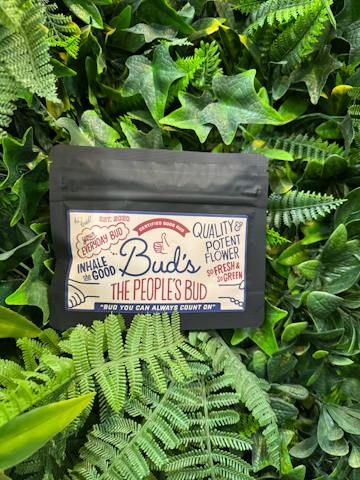
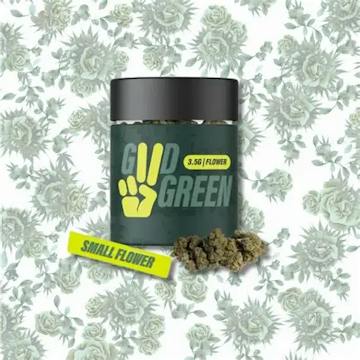
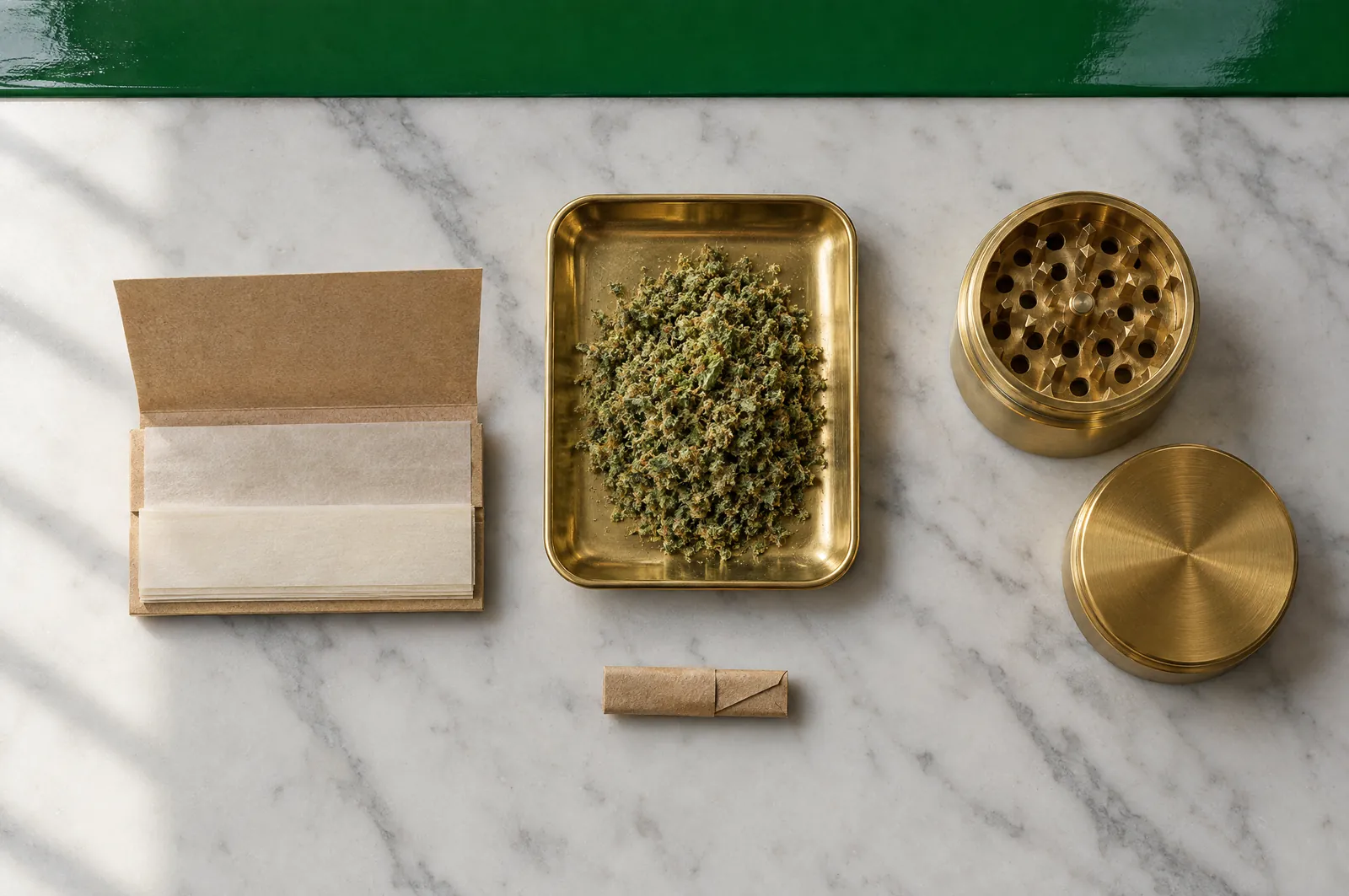
Rolling goes faster when everything is within reach before you start. You need dried cannabis flower, rolling papers, a thin strip of unprinted cardboard for the crutch, and a flat surface such as a tray or a plate so nothing rolls off the table. A grinder makes the flower more even, though it is not strictly required. One Green Leaf sells cannabis products, so check the live Dutchie menu to see what is currently available rather than assuming any specific item is in stock.
Papers come in a few standard sizes. Single wide is the shortest and holds the least. The 1 1/4 size is the most common starting point and suits one or two people. King size is longer and holds more. Paper material also varies, with rice, hemp and wood pulp being the usual options. Thinner papers take a lighter touch and tear more easily, so a slightly heavier hemp paper is often easier while you are learning.
Work over a tray with a raised edge if you have one. Loose flower that falls off the paper is easy to recover from a tray and hard to recover from a carpet. Wash and dry your hands first, since damp fingers will soften the paper and warm resin will stick to your skin instead of staying in the roll.
An even grind is what makes the rest of the roll behave
Break the flower down to a consistent, medium coarse texture. You are aiming for pieces roughly the size of coarse ground coffee. Anything larger leaves gaps and pokes at the paper. Anything closer to powder packs too densely and restricts the draw. If you are using a grinder, a few quarter turns in each direction is usually enough, and it is easy to over grind without noticing.
Without a grinder, break the flower apart with clean fingers or a small pair of scissors held inside a cup. Take your time and keep checking that the pieces are close to the same size. Hand broken flower tends to be less uniform, which is workable, but it means you will spend a bit longer distributing it inside the paper later.
Pick out any stems as you go. A stem inside a rolled joint will press against the paper and can push through the seam once the roll tightens, which is a common cause of a joint that will not stay lit evenly. Set the ground flower aside in a small pile so you can pinch from it while filling.
The crutch gives the joint structure and a clean draw
A crutch, also called a filter or a tip, is a rolled strip of thin cardboard placed at the mouth end of the joint. Business card stock, unprinted packaging card or pre-cut filter tips all work. Cut or tear a strip about half an inch tall and two inches long. Avoid anything with heavy ink or a glossy coating on it.
Fold the first quarter inch of the strip into a tight accordion, three or four short back and forth folds, then roll the remaining length around that accordion until you have a cylinder. The accordion at the center is what keeps loose plant material from pulling through when you draw. Aim for a cylinder roughly the diameter of a pencil, and let it relax slightly so it holds its own shape without unwinding.
The crutch does two jobs beyond filtering. It holds the mouth end open so the joint does not collapse when you hold it, and it gives you a firm anchor to pinch while you shape and tuck the paper. Rolling without one is possible, but the end tends to close up and the last portion becomes harder to hold.
Filling and distributing evenly matters more than packing tightly
Hold the paper in a gentle U shape between your index fingers and thumbs, with the gum strip along the top edge and facing toward you. Set the crutch at one end, flush with the edge of the paper. Then add ground flower along the length of the paper a pinch at a time, filling from the crutch end toward the open end.
Distribute rather than dump. Run a finger along the outside of the U and rock the paper side to side so the flower settles into an even line. Many people taper the roll slightly, keeping it a little thinner at the crutch end and a little fuller at the tip. That shape burns more predictably than a joint that is fat in the middle and thin at both ends.
Resist the urge to fill it to the brim. An overpacked paper cannot be shaped properly, the tuck will not reach, and the finished joint draws hard. If you are unsure, use less. A slightly underfilled roll can be topped off through the open tip at the end, but an overfilled one has to be emptied and started again.
Shape, tuck, roll and seal in one continuous motion
With the flower distributed, pinch the paper between your thumbs and index fingers and roll it back and forth a few times. This packs the flower into a cylinder without compressing it and tells you whether the fill is even. You should feel a consistent column rather than lumps.
Now tuck. Bring the edge of the paper closest to you down and around the flower, using your thumbs to guide that edge in behind the column while your index fingers hold the outer side. The tucked edge should go under the flower, not over it. A loose tuck is a common reason a joint comes out baggy, so work the edge in firmly along the whole length before you commit. Once tucked, roll upward with steady thumb pressure until only the gum strip is exposed.
Lightly moisten the gum strip. A thin, even pass is enough, and soaking it will wrinkle the paper and slow the burn at the seam. Press the seam down starting at the crutch end and working toward the tip so any trapped air escapes out the open end. Give it a few seconds to dry before handling it further.
Pack the tip, twist the end, and know when a pre-roll is the better call
The open tip usually needs a small amount of settling. Tap the crutch end gently on the table so the contents shift toward the crutch, then use a thin tool such as a chopstick or the end of a pen to press the flower down from the open end. Add a small pinch more if there is room, press again, then twist the excess paper at the tip into a short tail. That twist holds everything in place and gives you something to light.
Rolls commonly fail for three reasons: overpacking, an uneven grind and a loose tuck. Overpacking restricts airflow, an uneven grind leaves gaps that burn down one side, and a loose tuck produces a soft joint that sags in the middle. Each is fixable by slowing down at that specific step rather than by rolling harder.
If rolling is not something you want to spend time on, pre-rolls are one of the categories carried at One Green Leaf in Gibbsboro. New Jersey rules apply either way: you must be 21 or older with a valid government photo ID, and the state restricts where cannabis may be consumed. Check the live Dutchie menu for current availability, then shop in store, at the drive-thru, or by reserve-ahead pickup.
New Jersey permits adults 21 and older to purchase cannabis from state licensed retailers, and state rules govern where cannabis may be possessed and consumed.